


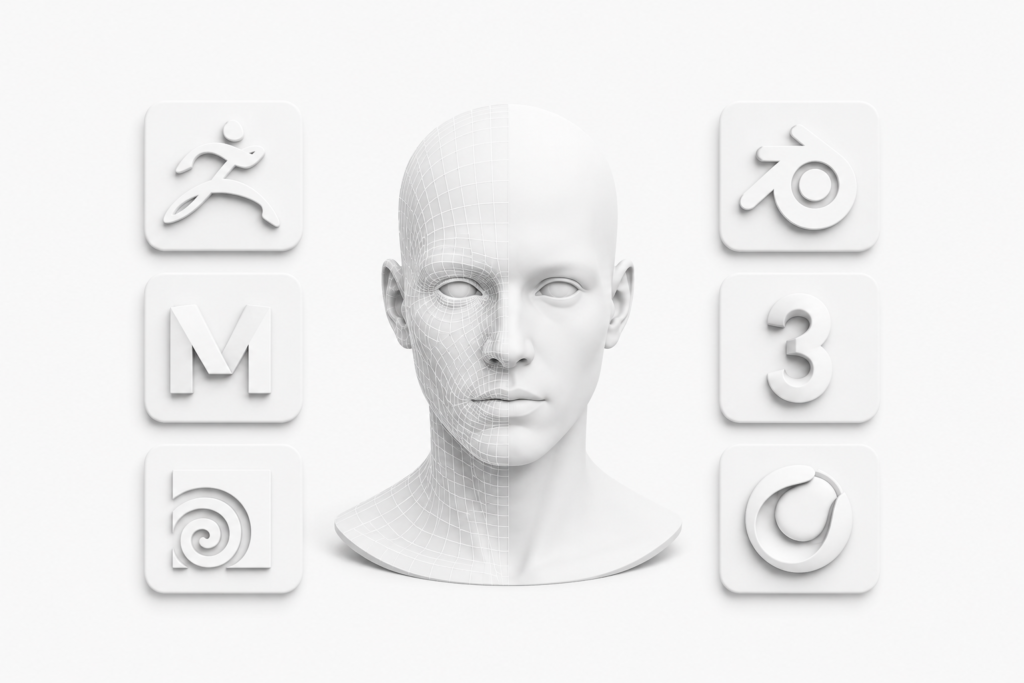
In today’s digital era, 3D modeling software has become the foundation of many creative industries, including product design, architecture, game development, animated films, visual effects (VFX), and e-commerce. In 2026, the industry continues to evolve with exciting innovations such as AI integration, more efficient workflows, and significant improvements in rendering performance and simulation technology. So, which 3D modeling software is the best choice in 2026?
This article explores the best 3D modeling software based on their features, ease of use, industry adoption, as well as their strengths and weaknesses.
1. Blender
Blender remains the world’s most popular open-source 3D software. Over the past few years, it has evolved rapidly and is now capable of competing with many commercial applications. The latest 2026 release introduces major improvements to Geometry Nodes, physics simulations, the Cycles rendering engine, asset management, and AI-powered workflows. As a result, more professional studios are adopting Blender for production pipelines.
2. Autodesk 3ds Max
Autodesk 3ds Max continues to be the industry standard for architectural visualization (ArchViz). It is well known for its fast polygon modeling workflow and excellent compatibility with rendering engines such as Corona Renderer and V-Ray. Creative Bloq ranked 3ds Max as one of the best overall 3D modeling software solutions in 2026 thanks to its flexibility, powerful modifier stack, and extensive plugin ecosystem.
3. Autodesk Maya
Autodesk Maya remains the industry standard for Hollywood film production and large animation studios. Its greatest strengths lie in rigging, character animation, simulation, and professional production pipelines. Maya is a professional 3D computer graphics software used for creating 3D models, character animations, visual effects (VFX), and high-quality renders. It is widely relied upon by major studios for producing blockbuster films, television series, and AAA video games.
4. Cinema 4D
Cinema 4D is well known for its intuitive user interface and beginner-friendly workflow. It has become the preferred choice for many motion designers, especially those working closely with Adobe After Effects. Creative Bloq also recognizes Cinema 4D as one of the easiest professional 3D software packages to learn without sacrificing advanced capabilities. Developed by Maxon, Cinema 4D is a professional solution for 3D modeling, animation, simulation, and rendering. It is especially popular in the television and advertising industries due to its powerful MoGraph tools, making it ideal for motion graphics, visual effects (VFX), and design visualization.
5. ZBrush
If your work focuses on organic modeling, digital characters, fantasy creatures, miniatures, or models for 3D printing, ZBrush remains the industry’s leading choice. Developed by Maxon, ZBrush is the industry-standard digital sculpting software used for sculpting, modeling, and painting highly detailed 3D objects. It is widely favored by character artists and film and game studios because it allows artists to sculpt digital models with the same freedom as working with real clay. Its ability to handle millions of polygons efficiently continues to make it the benchmark for digital sculpting in 2026.
6. Houdini
Houdini is widely recognized as the most powerful software for creating procedural effects such as explosions, smoke, fire, water, destruction, and procedural environments. Developed by SideFX, Houdini is a professional 3D animation and visual effects (VFX) software that features a node-based procedural workflow. This non-destructive approach enables artists to build highly complex, flexible, and reusable assets. Houdini has become an essential tool in the production of blockbuster films, television series, and AAA video games.
As artificial intelligence continues to advance and GPU performance improves, the gap between free and commercial 3D software is becoming increasingly narrow. Blender continues to close the distance with paid competitors, while Autodesk, Maxon, and SideFX maintain their leadership through professional-grade features and robust production pipelines. Ultimately, the best software depends on your specific needs and creative goals. So before you take your next step, which 3D software is your go-to creative tool?
Tinggalkan Balasan